
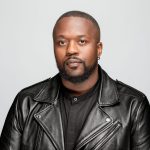
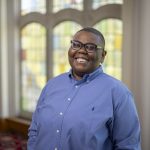
Drs. Ahmad Greene-Hayes, Darrius Hills, and Shatavia Wynn are 2025-2026 PRRI Public Fellows studying the intersection of politics, religion, LGBTQ rights, and gender. This Spotlight Analysis is the result of their collaborative research conducted with support from PRRI.
Alongside advocates of many faiths, Black Protestant clergy account for a significant portion of the moral and political leaders whose perspectives directly shape civic engagement, public theology, and community organizing across the nation. As legislative battles escalate over federal nondiscrimination laws and religious exemptions, these leaders navigate complex intersections and internal theological debates between the historic Black freedom struggle and contemporary LGBTQ+ civil rights. Understanding their responses offers critical insight into how religious authority is leveraged to either broaden coalitions for equality or uphold the politics of exclusion.
Our Spotlight Analysis examines Black clergy responses to nondiscrimination protections for LGBTQ+ people in Black Protestant churches. We explore the nuances of biblical interpretation, theological education, and community-based approaches in the pew and the pulpit. We query how Black Progressive clergy and their congregations grapple with expansive gender and sexual expressions in the current political climate, building on work by the Rev. Dr. Kelly Brown Douglas, the Rev. Dr. Brandon Thomas Crowley, and the Rev. Dr. Pamela Lightsey, among many others.
Our research supplements PRRI’s data on nondiscrimination protections for LGBTQ people and responses from Christian faith communities through a collaborative, mixed-methods approach. Using the email listserv of the Samuel DeWitt Proctor Conference (SDPC),[1] we contacted progressive Black clergy to examine their views on gender, sexuality, LGBTQ+ inclusion, and the future direction of Black Protestant churches. We developed a 26-question survey, including both closed- and open-ended questions.
Forty clergy responded; while the number of survey respondents is relatively small, this study breaks new ground on a topic that has received scant empirical attention, offering a critical foundation for future research. In addition, seven survey respondents agreed to be recontacted for oral history interviews. These interviews provided an opportunity to deepen further our understanding of progressive Black clergy views on these topics.
Our survey respondents primarily consisted of experienced clergy. Senior pastors represented the largest group of respondents (53%), followed by associate pastors (40%), with smaller numbers holding other leadership positions. Specifically, Baptist clergy made up over half of the sample (55%), followed by African Methodist Episcopal (AME) clergy (20%) and smaller representation from United Methodist, United Church of Christ, Pentecostal, and other traditions.
The median age of respondents is 61. While respondents assigned male at birth were overrepresented in the sample compared with those assigned female at birth, a greater proportion of respondents identified as women than as men; three identified as nonbinary. In addition, most respondents identified as straight (over 75%), with just 10 of 40 respondents (24%) identifying as LGBTQ+. Among those respondents, five identified as gay/lesbian, two as bisexual, two as “something else” (same-gender-loving and queer), and three as non-binary.

Our results show that most respondents support women’s leadership in the Black church (73%), indicating that there are now more nuanced and progressive views about Black women’s capacity for religious leadership. However, when asked to describe the nature of this shift over several decades, most respondents (60%) described it as a slight shift toward more inclusive views, while a few respondents viewed it as a significant shift. Almost no one reported a shift toward more conservative views.
Yet, the Rev. Rochelle Andrews, pastor of the Pleasant Grove United Methodist Church in the Baltimore-Washington Conference of the United Methodist Church observed:
“Black women are still not viewed as whole. This is the real reason I chose to serve in the UMC rather than the AME Church. Despite my credentials — including an MBA from Vanderbilt and over 20 years of experience in the nonprofit sector, where I have managed grants totaling up to $158 million — my expertise was dismissed. When I asked to lead a program for the AME Church, the bishop literally patted me on the head and told me not to ‘worry my pretty little face about it.’ … AME women are [also] often required to wear skirts, stockings, and pumps. If you cannot wear heels, you must obtain special permission. When I was sick with cancer and unable to wear heels, I had to request a formal ordinance just to wear loafers to the conference. … We are consistently given the most difficult, underfunded appointments — unlike the UMC, which requires a congregation to be able to financially support a pastor. … We are often relegated to the churches that cannot even afford to pay us.”
Rev. Andrews added that these dual identities often made leadership difficult for LGBTQ+ individuals within many Black churches: “When you combine these systemic challenges with the additional layer of being gay, you can see why being a gay Black woman in this denomination is such a significant struggle.”
Our survey data confirms Rev. Andrews’ observation. Views on LGBTQ+ leadership are noticeably more divided than views on women’s leadership. Half of our sample agreed with more progressive views on LGBTQ+ leadership, compared with most respondents who supported women’s leadership. Further, respondents described the shift toward inclusion on LGBTQ+ matters more cautiously, with more selecting “slight shift” or “not sure.”
This pattern is also reflected in congregational and denomination practices. On LGBTQ+ affirming practices, roughly 33% of respondents report their congregations have no formal policy on matters like ordaining LGBTQ+ clergy or performing same-sex unions. Similarly, the high frequency of “none of the above” responses suggests that many congregations may not be formally affirming. Respondents described their denominations similarly, with “none of the above” and “I don’t know” together representing most responses.

Finally, when asked about support offered to LGBTQ+ people, the most common responses were “no specific support is offered” and “informal/social support only,” suggesting inclusion is more interpersonal than institutional.

For progressive Black churches, clergy argued that support for LGBTQ+ people must also extend beyond inclusion to full affirmation. As the Rev. Jessica Collins of Florida notes, “For my current ministry, and what I hope to see in future congregations and denominations, it means the affirmation and promotion of those who identify as LGBTQIA without a restrictive label being necessary.”
Regarding the role of the Black church in addressing these pressing issues surrounding sexuality and gender identity, one queer-identified respondent observed that Black churches “can provide spiritual guidance, advocacy, healing, and safe spaces for honest dialogue,” and are “uniquely positioned to confront the harm caused by homophobia, transphobia, sexism, HIV stigma, and rigid gender expectations … at its best, the Black church should create communities where people do not have to choose between their faith, their culture, and their identity.” Likewise, the Rev. Dr. Anika Wilson Brown, the lead pastor at the historic Union Temple Baptist Church in Washington, D.C., attests, “We cannot heal a community by only bandaging one part of its body while actively letting another part bleed out due to our own dogmatic discomfort.”[2]
Most respondents support same-sex marriage, with “active protection” as the most common answer, in which they support publicly advocating for and legally securing same-sex marriage rights. This is a striking finding, given that many of these same respondents’ congregations have no formal inclusive LGBTQ+ policy within their bylaws — specifically regarding whether queer members can serve in ministry or participate fully in church life, including sacraments like marriage and baptism.

While most respondents said that their churches offer no formal inclusive policy, the Rev. Dr. Leslie Callahan, the first woman and fifth pastor of the St. Paul’s Baptist Church in Philadelphia, outlined a long-term, multi-year process that she initiated in her congregation:
“I used the pulpit to name specifically that immigrants, poor people, and gay folks are welcome in the house of God. … I informed deacons and seminary interns that homophobia was not permitted in our space; if they couldn’t treat everyone with dignity, they could find another church. … When a gay couple in the church got married in 2014, I announced it and offered congratulations just as I would for any other couple. … In 2017, after seeing how quickly federal protections were overturned under the Trump administration, I realized we needed ‘legislation’ in our bylaws. We revised our constitution to explicitly name non-discrimination based on gender and sexuality. … As part of that 2018 revision, we retired the Board of Deaconesses because it was a gender-specific role that conflicted with our new policy. Over 90% of the church ratified these changes.”
The Rev. Mia McClain, senior pastor of the Riverside Baptist Church in Washington, D.C., noted, “We intentionally offer our physical building as a free gathering space. For example, we house regular rehearsals for several ballroom houses in D.C. because one of our active deacons serves as a prominent housefather. Often, marginalized communities don’t need institutional charity; they simply require free, safe, unpoliced physical space to organize and gather.” For McClain, opening the doors of the church to the ballroom community that has historically been kicked out of the church and their homes into the streets, as shown in “Paris is Burning” and “Pose,” is a part of her focus on “church labor dynamics.” She observes, “Historically, a massive portion of the unpaid, uncredited labor that keeps congregations functioning has been extracted from women-identified and LGBTQIA individuals — whether open or closeted. The entire system of the traditional church has been structurally propped up by marginalized groups who are simultaneously denied the basic rights afforded to cis-heteronormative men.”[3]
Our survey data and oral histories indicate both broadened understandings of gender and sexuality alongside an open theological flexibility among many participants. Rather than remaining confined to traditional theological frameworks, many participants demonstrated a willingness to draw from myriad theological worldviews, while upholding a commitment to both Christian theological tradition(s) and a desire for full, material liberation, regardless of sex, gender, or orientation.
Conclusion
One of the challenges of studying the religious practices and faith commitments of Black Americans involves resisting the temptation to collapse into myopic depictions that flatten their religious lives and worlds. This is especially true of the Black church tradition. Our research examines Black Christian perspectives on gender and sexuality, with particular attention to the experiences of LGBTQ+ communities. More studies such as ours are needed due to the nuances they provide while detailing the rich diversity of Black American religious life, social worlds, and theological commitments.
[1] The Samuel DeWitt Proctor Conference is a national network that serves thousands of pastors, lay leaders and the next generation of those working for social justice. We appreciated the assistance and advice of the Rev. Teresa Smallword, a SDPC board member, for facilitating access to the listserv.
[2] Brown’s church recently hosted its inaugural Pride Sunday on June 7, 2026, and her prophetic sermon in support of LGBTQ+ people garnered criticism by traditionalists across a variety of social media platforms.
[3] It is worth mentioning that we were largely unsuccessful in securing oral history interviews with prominent Black male senior pastors who publicly identify as cisgender and heterosexual. Our quantitative data, however, helped us to consider the interplay between faith commitments and the gendered socialization of the Black clergymen who responded to our survey.